What were the reasons for passing the Regulating Act 1773 ? Discuss the provisions and shortcomings of Regulating Act 1773. Explain the provisions of the Act of settlement of 1781 to resolve the issues of the Regulating Act of 1773.
What were the reasons for passing the Regulating Act 1773 ? Discuss the provisions and shortcomings of Regulating Act 1773. Explain the provisions of the Act of settlement of 1781 to resolve the issues of the Regulating Act of 1773.
What were the reasons for passing the Regulating Act 1773 ?Discuss the provisions and shortcomings of Regulating Act 1773. Explain the provisions of the Act of settlement of 1781 to resolve the issues of the Regulating Act of 1773.
The British government introduced the Regulating Act 1773 during the reign of King George III in response to the growing unrest in Bengal due to excessive taxation and misgovernance by the East India Company. The act sought to regulate the company’s affairs, establish a Board of Control, and ensure better governance in India.
What were the reasons for passing the Regulating Act 1773 ?Discuss the provisions and shortcomings of Regulating Act 1773. Explain the provisions of the Act of settlement of 1781 to resolve the issues of the Regulating Act of 1773.
Reasons for Passing the Regulating Act of 1773
What were the reasons for passing the Regulating Act 1773 ?Discuss the provisions and shortcomings of Regulating Act 1773. Explain the provisions of the Act of settlement of 1781 to resolve the issues of the Regulating Act of 1773.
I. Financial Crisis
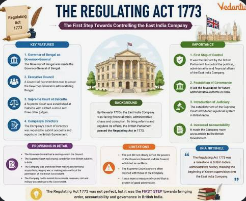
The East India Company faced bankruptcy by 1772 despite territorial gains, forcing it to ask the British government for a massive loan.
II. Rampant Corruption
Company officials grew immensely rich through private trade and accepting bribes while the corporate entity itself struggled financially.
III. Dual Government Failures
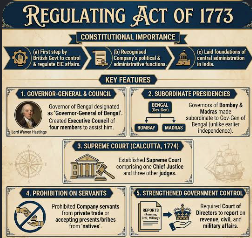
Robert Clive’s system of dual governance in Bengal where the company held revenue rights (Diwani) and the Nawab held policing/justice rights (Nizamat), caused administrative chaos and suffering for local populations.
What were the reasons for passing the Regulating Act 1773 ?Discuss the provisions and shortcomings of Regulating Act 1773. Explain the provisions of the Act of settlement of 1781 to resolve the issues of the Regulating Act of 1773.
Key Provisions of the Regulating Act
What were the reasons for passing the Regulating Act 1773 ?Discuss the provisions and shortcomings of Regulating Act 1773. Explain the provisions of the Act of settlement of 1781 to resolve the issues of the Regulating Act of 1773.
I. Governance & Centralization
It upgraded the Bengal Governor to Governor-General of Bengal with a four-member council, subordinating Bombay and Madras to Bengal
II. Judiciary & Accountability
It set up a Supreme Court in Calcutta, prohibited private trade and bribes for servants, and mandated the Court of Directors to report all affairs to British authorities. The Regulating Act of 1773 established the Supreme Court of Judicature at Fort William in Calcutta as the first supreme judicial body under British rule in India. The 1773 Regulating Act also appointed a Governor-General and council to oversee the East India Company’s affairs in India. The British Crown granted the Supreme Court broad jurisdiction over British subjects and Company employees in India. However, several cases, including those involving Raja Nanda Kumar, the Patna case, and the Cossijurah case, demonstrated conflicts between the Supreme Court’s authority and the Governor-General’s authority over local administration, highlighting tensions between the new judicial and executive powers established by the Regulating Act.
What were the reasons for passing the Regulating Act 1773 ?Discuss the provisions and shortcomings of Regulating Act 1773. Explain the provisions of the Act of settlement of 1781 to resolve the issues of the Regulating Act of 1773.
Conflicts and Shortcomings of the Regulating Act 1773
What were the reasons for passing the Regulating Act 1773 ?Discuss the provisions and shortcomings of Regulating Act 1773. Explain the provisions of the Act of settlement of 1781 to resolve the issues of the Regulating Act of 1773.
A. Non-redressal of the grievances of Indian
The Regulating Act 1773 did not address the grievances and issues of the Indian population who were paying taxes and revenue and could not mitigate corruption amongst the officials of the company.
What were the reasons for passing the Regulating Act 1773 ?Discuss the provisions and shortcomings of Regulating Act 1773. Explain the provisions of the Act of settlement of 1781 to resolve the issues of the Regulating Act of 1773.
B. Vague Boundaries
The Act failed to clearly define the jurisdictional boundaries between the new Supreme Court and the Governor-General-in-Council, leading to power struggles.
C. Institutional Clashes
Tensions erupted over whether local Indian inhabitants and executive actions fell under English common law or company administration (exemplified by high-profile disputes like the Patna and Cossijurah cases).
What were the reasons for passing the Regulating Act 1773 ?Discuss the provisions and shortcomings of Regulating Act 1773. Explain the provisions of the Act of settlement of 1781 to resolve the issues of the Regulating Act of 1773.
D. No veto power
What were the reasons for passing the Regulating Act 1773 ?Discuss the provisions and shortcomings of Regulating Act 1773. Explain the provisions of the Act of settlement of 1781 to resolve the issues of the Regulating Act of 1773.
The Governor-General had no veto power.
These conflicts were later addressed and curtailed by the Amending Act of 1781.
What were the reasons for passing the Regulating Act 1773 ?Discuss the provisions and shortcomings of Regulating Act 1773. Explain the provisions of the Act of settlement of 1781 to resolve the issues of the Regulating Act of 1773.
Act of settlement of 1781
What were the reasons for passing the Regulating Act 1773 ?Discuss the provisions and shortcomings of Regulating Act 1773. Explain the provisions of the Act of settlement of 1781 to resolve the issues of the Regulating Act of 1773.
The Act of settlement of 1781 was an amending Act which removed the shortcomings of the Regulating Act 1773.
The Act of settlement of 1781 was passed by
the British Parliament on 5th July 1781 and also known as the Declaratory Act 1781.
What were the reasons for passing the Regulating Act 1773 ?Discuss the provisions and shortcomings of Regulating Act 1773. Explain the provisions of the Act of settlement of 1781 to resolve the issues of the Regulating Act of 1773.
The basic aim of the Act of settlement 1781
What were the reasons for passing the Regulating Act 1773 ?Discuss the provisions and shortcomings of Regulating Act 1773. Explain the provisions of the Act of settlement of 1781 to resolve the issues of the Regulating Act of 1773.
was to establish a new system of courts to remove the grievances against the Supreme Court.
The key provision of the Act was to
demarcate the relations between the Supreme court and the Governor General in council.
The Conflict between the Supreme Court and supreme Council reached its extreme during 1979-1780. Then, the supreme Council filed a petition against the proper working of the Supreme Court in Bengal. A similar petition was filed by various Zamindars, Company’s servants and so on. The Parliament, therefore appointed a Committee to inquire into this matter and submit a report. Then the Committee Submitted its report and as a result the Parliament passed the Act of Settlement in 1781.
What were the reasons for passing the Regulating Act 1773 ?Discuss the provisions and shortcomings of Regulating Act 1773. Explain the provisions of the Act of settlement of 1781 to resolve the issues of the Regulating Act of 1773.
Provisions of the Act of Settlement of 1781
What were the reasons for passing the Regulating Act 1773 ?Discuss the provisions and shortcomings of Regulating Act 1773. Explain the provisions of the Act of settlement of 1781 to resolve the issues of the Regulating Act of 1773.
(a) This Act provisioned the Governer-General and
its council were completely free from the
jurisdiction of the Supreme Court for the order passed or the Act done by them in public.
(b) The Supreme Court had no jurisdiction in the matters concerning the Collection of revenue.
(c) This Act excluded the persons who were
employed in Company or under the
Governor General from the jurisdiction of the Supreme Court in the matters relating to inheritance, succession, contract except wrong Trespass.
(d) This Act protects any Judicial
officer in the Supreme Court from actions for any act done by him/her in exercise of his/her judicial functions.
(e) The British Parliament for the very first time gave recognition to the civil and Criminal Jurisdiction of the Provincial courts which were Independently existing.
What were the reasons for passing the Regulating Act 1773 ?Discuss the provisions and shortcomings of Regulating Act 1773. Explain the provisions of the Act of settlement of 1781 to resolve the issues of the Regulating Act of 1773.
(f) The framing of Rules and Regulations for conducting civil Suits and criminal trials were only possible due to this Act, since it empowered the Governor General and the council for the same.
What were the reasons for passing the Regulating Act 1773 ?Discuss the provisions and shortcomings of Regulating Act 1773. Explain the provisions of the Act of settlement of 1781 to resolve the issues of the Regulating Act of 1773.
Though the Act of settlement of 1781 failed to remove the flaws in the Regulating Act of 1773 completely but it proved to be a great support in bringing the changes to the system of the Administration and Justice.
What were the reasons for passing the Regulating Act 1773 ?Discuss the provisions and shortcomings of Regulating Act 1773. Explain the provisions of the Act of settlement of 1781 to resolve the issues of the Regulating Act of 1773.